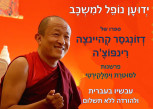
שלושת ההיבטים העיקריים של הדרך – The Three Principal Aspects of the Path – עם צנשאב סרקונג רינפוצ'ה
- תאריך: 02.01.2026
- תאריך סיום: 03.01.2026
- מורה: צנשאב סרקונג רינפוצ'ה
- מקום: כפר מונאש, מרכז טל הדר
For a full description of the course in English, please scroll down.
שלושת ההיבטים העיקריים של הדרך
כולנו רוצים שלווה ואושר. לא שלווה ואושר רגעיים שמגיעים עם כוס קפה או חופשה, אלא שלווה ואושר פנימיים, יציבים, מתמידים, כאלה שאינם תלויים במה שקורה סביבנו.
אך כדי להגיע למצב הזה, אנחנו צריכים דרך. מסלול שינחה אותנו, שישרטט את קווי המתאר הנדרשים. כמו מסלול המראה שיש לו שוליים, ואנחנו צריכים לנווט בו את דרכנו בין השול הימני לשמאלי, השומרים עלינו לבל נסטה מדרכנו – ולהמריא אל המרחב הפתוח, אל החוכמה.
ג'ה צונגקהאפה, אחד המורים הגדולים במסורת הבודהיזם הטיבטי, ניסח את "שלושת ההיבטים העיקריים של הדרך" – שלושה עקרונות שכל המבקשים שלווה ואושר אמיתיים צריכים להכיר, להבין ולתרגל. וכל ההיבטים שלובים זה בזה:
נחישות להיחלץ –כאשר נבין שהמרדף אחר הנאות חולפות לא באמת מספק אותנו, נבין שאיננו רוצים לחזור למעגל הסבל האינסופי, ונפתח את ההחלטה הנחושה לפעול ככל הנדרש כדי שנוכל להיחלץ ללא שוב ממנו.
לאמה צונגקהאפה כותב: "ללא נחישות טהורה להיחלץ, אין דרך להרגיע את החתירה לתענוגות ולפירות של אוקיינוס הקיום". נחישות להיחלץ אינה בריחה מהחיים, אלא החלטה פנימית להפסיק להזדהות עם מה שמייצר סבל. זהו רצון כן להשתחרר.
בודהיצ'יטה – הרצון להגיע להארה לא רק בשביל עצמנו, אלא לטובת כל בעלי התודעה.
צונגקהאפה מזכיר: "אם הנחישות הטהורה להיחלץ לא תהיה חדורה בכינון התודעה, אזי לא תהפוך היא לגורם לאושר המושלם של ההארה שאין למעלה ממנה". בודהיצ'יטה, או כינון התודעה, היא ליבה של הדרך – חמלה עמוקה המניעה אותנו לפעול מתוך אהבה, לא מתוך פחד.
חוכמה – ההבנה שהמציאות אינה כפי שהיא נראית.
צונגקהאפה כותב: "החזות היא ההתהוות בתלות ובזיקה שאינה מוטעית והריקות חפה מכל הנחות היסוד –כל עוד שתי התובנות הללו מופיעות כנפרדות לא הבנת נכוחה את כוונת המוּני". החוכמה היא היכולת לראות את הדברים כפי שהם באמת – לא כקבועים, לא כבלתי משתנים, אלא כארעיים וכתהליכים תלויים זה בזה.
בקורס זה יעבור איתנו צנשאב סרקונג רינפוצ'ה על הטקסט המרתק הזה: נלמד כיצד לתרגל את ההיבטים האלה, איך ליישמם ביום-יום, ואיך להפוך אותם להרגל טבעי – כזה המוביל אותנו פנימה, אל עומק השלווה והאושר שאינם תלויים בדבר.
צנשאב סרקונג רינפוצ'ה – גלגולו של אחד משבעת מאסטרי ההתדיינויות עם כבוד הדלאי לאמה – קיבל את הכשרתו הבודהיסטית במנזר גאנדן ג'נגצה בדרום הודו. אחרי שהחליט להמשיך את התמסרותו לדהרמה שלא כנזיר הוא המשיך את לימודיו במכון לדיאלקטיקה בודהיסטית בדהרמסאלה.
בעצתו של כבוד הדלאי לאמה סיים צנשאב סרקונג רינפוצ'ה שלוש שנים אינטנסיביות של לימוד אנגלית בקנדה, והוא רואה זכות לעצמו לשאת במחויבויותיו של קודמו, קיאבג'ה צנשאב סרקונג טוגסיי רינפוצ'ה, לסייע וללמד ככל שיינתן.
רינפוצ'ה מלמד בהודו, באירופה ובישראל תוך שהוא משלב את ניסיונו בלימוד ובתרגול הבודהיסטי עם היכרותו את העולם המערבי. שיעוריו שופעי חוכמה, חן והומור והם מרתקים ביותר.
זהו ביקורו השלישי בישראל.
עוד על צנשאב סרקונג רינפוצ'ה תוכלו לקרוא כאן.
הקורס יתקיים בטיבטית ובאנגלית ויתורגם לעברית ע"י הנזיר קארצוּן (יקי פלט).
מתי: הקורס יתקיים בימים שישי ושבת (ללא לינה) 2-3.1.26 בכפר מונאש.
לו"ז הקורס
יום שישי
09:00 הגעה והרשמה
9:30 – 10:00 דברי פתיחה ומדיטציה
10:00 – 13:00 שיעור [כולל הפסקה]
13:00 – 14:00 ארוחת צהריים
14:00 – 14:45 קבוצות דיון
14:45 – 15:00 הפסקה
15:00 – 17:00 שיעור [כולל הפסקה]
17:15 סיום היום הראשון
יום שבת
09:00 הגעה והרשמה
9:30 – 10:00 דברי פתיחה ומדיטציה
10:00 – 13:00 שיעור [כולל הפסקה]
13:00 – 14:00 ארוחת צהריים
14:00 – 14:30 שיחת סיכום
14:30 – 17:00 שיעור [כולל הפסקה]
17:00 פירוק
המשתתפים יתבקשו להיות נוכחים בכל משך זמן הקורס ובכל הפעילויות שיתקיימו במהלכו.
המשתתפים מתבקשים להדפיס את הטקסט בעברית המצורף בתחתית העמוד, או להורידו לטלפון/מחשב. לא יחולקו עותקים פיזיים של הטקסט בקורס.
נשמח להבאת כיבוד לפינת קפה (פירות, עוגיות וכו'- עדיפות לכיבוד בריא).
נא הביאו ארוחת צהריים אישית (לא תהיה ארוחה משותפת), כוסות אישיות, היות ולא יהיו כוסות חד פעמיות בקורס.
להסבר מפורט על מהלך הקורסים, כללי התנהגות, מה להביא ועוד – תוכלו לקרוא כאן.
אנחנו שמחים שאתם שוקלים להירשם לקורס "שלושת ההיבטים העיקריים של הדרך" עם סרקונג רינפוצ'ה – אין לנו ספק שהקורס יהיה מרתק ובעל תועלת רבה.
לאחר מחשבה ומתוך רצון להמשיך לקיים פעילויות בדאנה, החלטנו לפרסם את כלל העלויות של הקורס: העלויות הישירות וכן עלויות ההיערכות.
אנחנו מבקשים להדגיש שאין בפרסום זה כל שינוי במדיניות עמותת ידידי הדהרמה לקיים את כל פעילויותיה בדאנה (תרומה בנדיבות הלב)!
הפרסום הזה נועד רק לשקף את רמת ההוצאות הארגוניות, ואולם אנחנו מבקשים מכל אחת ואחד מכם, בבואכם לפתוח את הלב, לתת אך ורק כפי יכולתכם ומתוך שמחה על הנתינה, תהא אשר תהא – בין אם היא מוגבלת בעת הזו, ובין אם ברחבות ובנדיבות שתאפשר גם לסייע לחברינו לדהרמה.
העלויות למשתתף אינן כוללות דאנה למורים, אלא כאמור את ההוצאות הארגוניות בלבד:
עלות בש"ח למשתתף עבור שני ימי הלימוד – לא כולל דאנה למורים:
שכירות המקום, פינת קפה וכד' – 65
השתתפות בעלות אירוח המורה בישראל – 220
תקורות ומנהלות – 40
סה"כ עלות למשתתף עבור יומיים – 325 שח.
אם מסיבה כלשהי נמנע מכם להגיע לקורס – אנא עדכנו אותנו בהקדם האפשרי.
לאחר שמילאתם את הטופס, תקבלו אישור הרשמה למייל.
במידה והאישור לא התקבל – יש לבדוק את תקינות כתובת המייל שהזנתם.
The Three Principal Aspects of the Path with Tsenshap Serkong Rinpoche
The Three Principal Aspects of the Path
We all seek peace and happiness – not the fleeting kind that comes with a cup of coffee or a vacation, but inner peace and happiness that are stable, enduring, and independent of external circumstances.
To reach such a state, however, we need a path – a way that guides us and draws the necessary lines of direction. Like a runway with two edges, we need to navigate between its right and left sides that keep us from straying – and take off into the open space, into wisdom.
Je Tsongkhapa, one of the great teachers in the Tibetan Buddhist tradition, formulated The Three Principal Aspects of the Path – three essential principles that anyone seeking true peace and happiness must know, understand, and practice. The three are deeply interconnected:
Renunciation – When we understand that chasing transient pleasures does not truly satisfy us, we realize we no longer wish to return to the endless cycle of suffering, and we develop the firm determination to do whatever is required to break free from it once and for all.
Lama Tsongkhapa writes: "Without pure renunciation there is no means to pacify the yearning for the joys and fruits of samsaric ocean." Renunciation is not an escape from life; it is a deep inner decision to stop identifying with what produces suffering. It is the sincere wish to be liberated.
Bodhicitta – The aspiration to attain enlightenment not only for our own sake but for the benefit of all sentient beings.
Je Tsongkhapa reminds us: "Such renunciation too if it is not sustained by pure awakening mind, it will not become a cause of the perfect bliss of unexcelled enlightenment." Bodhicitta, the awakening mind, is the heart of the path – profound compassion that moves us to act from love, not from fear.
Wisdom – The understanding that reality is not as it appears.
Je Tsongkhapa writes: "So long as the two understandings – of appearance, which is undeceiving dependent origination, and emptiness devoid of all theses – remain separate, so long you have not realized the intent of the Sage." Wisdom is the ability to see things as they truly are – not fixed, not permanent, but impermanent and dependently arisen.
In this course, Tsenshap Serkong Rinpoche will guide us through this profound text: we will learn how to cultivate and practice these aspects, how to integrate them into daily life, and how to make them a natural habit – one that leads us inward, to the depth of peace and happiness that depend on nothing external.
Tsenshap Serkong Rinpoche – the reincarnation of one of the seven debate masters of His Holiness the Dalai Lama – received his Buddhist training at Ganden Jangtse Monastic University in South India. Having chosen to continue his dedication to the Dharma as a lay practitioner, he went on to study at the Institute of Buddhist Dialectics in Dharamsala.
At the advice of His Holiness the Dalai Lama, Tsenshap Serkong Rinpoche completed three intensive years of English studies in Canada. He considers it his privilege to carry the responsibilities of his predecessor, Kyabje Tsenshap Serkong Tugse Rinpoche – to serve and teach wherever he is able.
Rinpoche teaches in India, Europe, and Israel, combining his deep Buddhist study and practice with his understanding of Western culture. His teachings are full of wisdom, grace, and humor – and are deeply engaging.
This visit marks his third time teaching in Israel.
When: The course will take place on Friday and Saturday (non-residential), January 2–3, 2026, at Kfar Monash. The schedule of the live sessions on those days will be announced soon.
Broadcast: The course will be translated in English by Simon Houlton via Zoom. The Zoom link and password will be published a few days before the beginning of the course.
Please follow this page for updates.
In the spirit of the Buddhist tradition, the teacher and organizing team offer their time and effort on a completely voluntary basis, receiving no payment. Participation in this course is also by donation (dāna) only, with no fixed amount – so that everyone who wishes to participate may do so joyfully and contribute according to their ability, goodwill, and generosity of heart.
Your donations, whether made before or after the teachings, will go toward covering the organizational expenses and offering dāna in gratitude to the teacher.
The course will be delivered via ZOOM in the following link:
Join Zoom Meeting
https://us02web.zoom.us/j/81686464669?pwd=taCd1Haac5IZKUyjdXZ2Hx9M1lkake.1
Meeting ID: 816 8646 4669
Passcode: 234260
Viewing the course, which is broadcast in real time, does not require prior registration and is open to the general public.
Schedule (Israel time)
Friday
10:00–13:00 Class (including a break) Rinpoche
15:00–17:00 Class (including a break) Rinpoche
Saturday
10:00–13:00 Class (including a break) Rinpoche
14:30–17:00 Class (including a break) Rinpoche
The Three Principal Aspects of the Path
Je Tsongkhapa
Tibetan title: lam gyi gtso bo rnam pa gsum
Homage to the most venerable teachers!
1
shall explain here to the best of my ability:
The essential points of all the scriptures of the Conqueror;
The path acclaimed by all excellent bodhisattvas;
The gateway for the fortunate ones aspiring for liberation.
2
Those who are not attached to the joys of cyclic existence,
Who strive to make meaningful this life of leisure and apportunity,
And who place their trust in the path that pleases the Conquerors –
O fortunate ones, listen with an open heart.
3
Without pure renunciation there is no means to pacify
The yearning for the joys and fruits of samsaric ocean;
And as craving for existence chain us thoroughly,
At first search for a true renunciation.
4
By cultivating in mind that this human life is so hard to find
Yet has no time to spare, preoccupations with this life will cease;
By contemplating repeatedly the truth of karma and samsaric suffering,
Preoccupations with next life will come to cease.
5
As you habituate in this way and when not even an instant
Of admiration arises for the prosperities of cyclic existence,
And when the thought aspiring for liberation arises day and night,
At this point true renunciation has arisen.
6
Such renunciation too if it is not sustained
By pure awakening mind it will not become a cause
Of the perfect bliss of unexcelled enlightenment;
Therefore O intelligent ones, generate the excellent awakening mind.
7
They’re being swept away constantly by four powerful rivers;
They’re bound tightly with fetters of karma most difficult to escape;
They’re trapped inside the iron mesh of self-grasping;
They're enveloped from everywhere by thick mists of ignorance;
8
They take birth within cyclic existence that has no end,
Where they’re endlessly tormented by the three sufferings.
By reflecting on all your mothers who suffer such conditions,
Please generate the supreme awakening mind.
9
If you do not have the wisdom realising the ultimate nature,
Even if you gain familiarity with renunciation and awakening mind,
You will not be able to cut the root of samsaric existence;
So strive in the means of realizing dependent origination.
10
When with respect to all phenomena of samsara and nirvana,
You see that cause and effects never deceive their laws,
And when you have dismantled the focus of objectification,
At that point you have entered the path that pleases the Buddhas.
11
So long as the two understandings – of appearance,
Which is undeceiving dependent origination,
And emptiness devoid of all theses – remain separate,
So long you have not realized the intent of the Sage.
12
However at some point when, without alternation but at once,
The instant you see that dependent origination is undeceiving,
If the entire object of grasping at certitude is dismantled,
At that point your analysis of the view has culminated.
13
Furthermore when appearance dispels the extreme of existence,
And when emptiness dispels the extreme of non-existence,
And if you understand how emptiness arises as cause and effect,
You will never be captivated by views grasping at extremes.
14
Thus when you have understood as they are
The essentials of the three principal aspects of the path,
O son, seek solitude and by enhancing the power of perseverance,
Swiftly accomplish your ultimate aspiration.
This advice was given by the monk Lobsang Drakpai Pal to Ngawang Drakpa, a leading person of Tsakho
region.
© English translation. Geshe Thupten Jinpa, 2003.
תרומותיכם, אותן ניתן לעשות בכל עת הן לפני השיעור והן לאחריו, מיועדות לכיסוי כל ההוצאות הארגוניות ולמתן דאנה כהוקרת תודה למורה.
All remaining donations after covering the costs will be offered to the precious teacher.